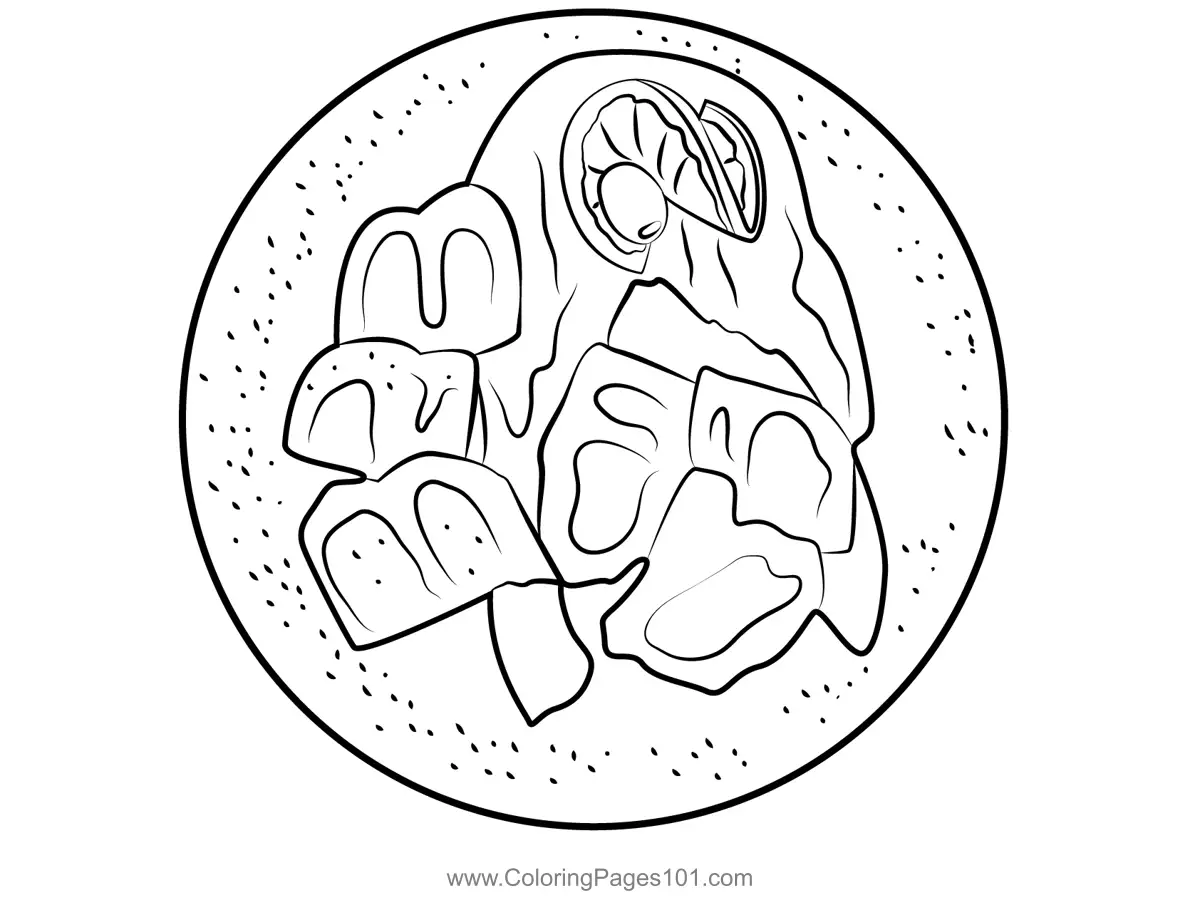
Meat Coloring Pages
Children and adults alike discover endless entertainment through creative activities that spark imagination and develop fine motor skills. Meat coloring pages offer a unique twist on traditional coloring subjects, providing an educational opportunity to explore different food items while enjoying artistic expression. At Magic Fingers Art, we've curated an exceptional collection of printable designs featuring various meat products, from succulent steaks to delicious chicken drumsticks, allowing colorists of all ages to engage with food-themed artwork in an entertaining and educational manner. These specialized coloring sheets transform ordinary protein sources into extraordinary artistic subjects, making them perfect for teaching children about nutrition, food groups, and healthy eating habits while they develop their coloring abilities and color recognition skills.
About Meat Coloring Pages
The world of food-themed artwork has expanded dramatically, and meat coloring pages represent a fascinating niche within this creative category. These specialized pictures to color showcase everything from raw cuts displayed at butcher shops to beautifully prepared dishes ready for serving at family dinners. Parents and educators appreciate how these unique designs help children understand where their food originates while simultaneously providing hours of creative entertainment. Our collection at Magic Fingers Art includes detailed illustrations of beef cuts, pork chops, lamb shanks, poultry pieces, and various processed meat products, each carefully designed to be both educational and enjoyable. The coloring pictures feature realistic details that help young artists understand the texture, shape, and appearance of different protein sources, making them valuable tools for nutritional education and culinary awareness. Teachers often incorporate these resources into lesson plans about food pyramids, balanced diets, and cooking processes, transforming standard classroom activities into engaging learning experiences. The versatility of our meat coloring pages makes them suitable for various settings, including homes, schools, daycare centers, and even cooking classes where instructors want to introduce food concepts through artistic methods.
How to Get Started
Accessing our extensive library of meat coloring pages couldn't be simpler for anyone seeking quality free coloring pages for their creative projects. Magic Fingers Art has streamlined the entire process, ensuring that parents, teachers, and coloring enthusiasts can quickly find and obtain the perfect designs for their needs. Simply browse through our carefully organized categories, select your preferred illustration, and choose whether you'd like to print immediately or download for later use. Each design has been optimized for standard home printers, ensuring crisp lines and clear details regardless of your printing equipment. The printable format means you can create multiple copies of favorite designs, allowing siblings to color together or enabling you to experiment with different color schemes on identical templates. Our platform supports various paper sizes and orientations, giving you flexibility in how you present these coloring sheets to young artists. Before beginning any coloring session, gather appropriate supplies such as crayons, colored pencils, markers, or even watercolors, depending on personal preference and desired artistic effects. Consider the age and skill level of the person who will be coloring, as some designs feature intricate details better suited for experienced colorists, while others present simpler outlines perfect for younger children just developing their coordination abilities.
Meat Coloring Pages - Creative Coloring Ideas
Transforming meat coloring pages into stunning artwork requires imagination, experimentation, and willingness to explore unconventional color combinations beyond realistic browns and pinks. While traditional meat colors provide authentic representations, encouraging children to use vibrant purples, blues, greens, and oranges can stimulate creative thinking and artistic freedom. Consider creating themed collections where all pictures to color follow specific color palettes, such as rainbow meats or monochromatic designs using various shades of a single hue. Advanced colorists might experiment with shading techniques, adding highlights and shadows to create three-dimensional effects that make flat illustrations appear remarkably lifelike. Background elements offer additional creative opportunities—instead of leaving white space around the main subject, add tablecloths, plates, garnishes, or kitchen settings to create complete scenes. Our coloring book selections include both isolated meat items and complex compositions featuring multiple elements, providing options for quick coloring sessions or extended artistic projects. Seasonal variations present another creative avenue; imagine Thanksgiving turkeys adorned with autumn colors or summer barbecue scenes featuring bright, cheerful backgrounds. Group activities become more engaging when participants compare their finished versions of identical meat coloring pages, revealing how individual color choices and techniques produce dramatically different results from the same starting template. Educational extensions might include researching actual meat colors, discussing cooking methods that change appearance, or exploring cultural differences in meat preparation and presentation across various cuisines worldwide.
Educational Benefits of Food-Themed Coloring Activities
Beyond simple entertainment value, meat coloring pages serve important educational functions that support childhood development across multiple domains. Fine motor skill development occurs naturally as children manipulate coloring tools, learning to control pressure, direction, and movement while staying within designated boundaries. Hand-eye coordination improves through the focused attention required to match colors to specific areas, building neural pathways essential for writing, drawing, and other precise manual tasks. Nutritional awareness grows as children become familiar with different protein sources, potentially reducing food neophobia and encouraging more adventurous eating habits. Vocabulary expansion happens organically when adults introduce terms like "marbling," "cut," "portion," and specific meat names during coloring sessions. These free coloring pages also provide opportunities for mathematical learning, as children can count items, compare sizes, discuss fractions when coloring partial pieces, or even explore basic geometry through the shapes present in various cuts. Cultural education emerges when discussing how different societies prepare, season, and consume various meats, opening conversations about diversity, traditions, and global cuisines. The quiet concentration required for detailed coloring work helps develop attention span and patience, qualities increasingly valuable in our fast-paced digital world. Parents appreciate how these printable resources offer screen-free entertainment that promotes mindfulness and relaxation for both children and adults seeking stress relief through creative expression.
Printing Tips for Optimal Results
Achieving professional-quality results when you decide to print our meat coloring pages requires attention to several technical considerations that significantly impact the final product. Paper selection plays a crucial role—standard copy paper works adequately for basic projects, but heavier cardstock provides superior durability and prevents marker bleed-through when using wet media. Printer settings should be adjusted to maximize line clarity; selecting "best quality" or "high resolution" modes ensures crisp edges and visible details, particularly important for designs featuring intricate patterns or fine textures. Black ink levels deserve checking before printing multiple coloring sheets, as faded lines frustrate colorists and diminish the overall experience. Consider printing several copies of favorite designs simultaneously, creating a personal coloring book by organizing pages in a binder or folder for convenient access during future creative sessions. Scaling options allow customization of image size—enlarge designs for younger children who need larger spaces to color, or reduce dimensions to create miniature versions suitable for detailed work with fine-tipped instruments. Color test prints help verify that your printer accurately reproduces the black outlines without introducing unwanted color casts or gray tones that might interfere with the coloring experience. Storage of printed but uncolored pages requires protection from moisture, direct sunlight, and physical damage; flat storage in folders or portfolios prevents creasing and keeps your collection of pictures to color in pristine condition until you're ready to begin your artistic endeavors.
Expanding Your Collection Beyond Basic Designs
While individual meat coloring pages provide excellent standalone activities, Magic Fingers Art encourages users to explore thematic collections that create cohesive artistic experiences spanning multiple sessions. Consider assembling complete meal scenes by combining meat designs with vegetable, grain, and fruit coloring pictures from our extensive library, then arranging finished pieces into a visual food pyramid display. Seasonal collections might feature summer grilling favorites, winter holiday roasts, or springtime picnic foods, each grouping telling a story through coordinated imagery. Challenge advanced colorists by printing the same design multiple times and experimenting with different media—compare how crayons, markers, colored pencils, and watercolors each produce distinct effects on identical templates. Create personalized gifts by coloring meat coloring pages and incorporating them into handmade recipe cards, kitchen decorations, or educational materials for aspiring young chefs. Scrapbookers and crafters discover innovative uses for these printable resources, integrating colored pages into journals, memory books, or mixed-media artwork that celebrates culinary interests. Restaurant-themed playsets become more engaging when children color their own menu items, including various meat options that add realism to imaginative play scenarios. Homeschooling families incorporate these specialized coloring sheets into comprehensive units about agriculture, animal husbandry, food processing, and nutrition science, making abstract concepts tangible through hands-on artistic activities that reinforce academic learning objectives.
Why Magic Fingers Art Stands Out for Quality Coloring Resources
Selecting Magic Fingers Art for your meat coloring pages needs means choosing a platform committed to excellence, variety, and user satisfaction across every aspect of the coloring experience. Our design team carefully crafts each illustration with attention to anatomical accuracy, ensuring that educational value accompanies artistic enjoyment. The free coloring pages we offer maintain professional quality despite their no-cost accessibility, never compromising on detail, clarity, or creativity to maximize value for our community. Regular updates introduce fresh designs that reflect current trends, seasonal themes, and user requests, keeping our collection dynamic and responsive to audience preferences. User-friendly navigation helps visitors quickly locate specific types of pictures to color, whether searching for particular cuts, preparation styles, or difficulty levels appropriate for different age groups. Download speeds remain consistently fast, and file formats ensure compatibility with various devices and operating systems, eliminating technical frustrations that might interrupt creative momentum. Our commitment to providing resources suitable for both children and adults means offering range—from simple outlines perfect for preschoolers to complex, detailed illustrations that challenge experienced colorists seeking sophisticated projects. Privacy protection and safe browsing experiences make Magic Fingers Art a trusted destination for families, educators, and individuals seeking wholesome creative content without concerns about inappropriate advertisements or data collection practices that plague many free resource websites.
Incorporating Meat Coloring Pages Into Educational Curricula
Educators discover remarkable versatility when integrating meat coloring pages into lesson plans spanning multiple subject areas and grade levels. Science classes benefit from discussions about animal biology, muscle structure, protein composition, and nutritional chemistry that naturally arise while students work on these specialized coloring sheets. Health education units about balanced diets, portion control, and food group identification become more engaging when students color examples of protein sources while learning about their role in human nutrition. Social studies lessons exploring cultural food traditions, historical meat preservation methods, or economic aspects of livestock farming gain visual components through relevant coloring pictures that help students connect abstract concepts to concrete imagery. Language arts activities might include writing descriptive paragraphs about favorite meat dishes, creating fictional stories featuring butcher shop characters, or developing persuasive essays about dietary choices—all enhanced by corresponding colored illustrations. Mathematics integration occurs through measurement activities where students calculate serving sizes, compare nutritional values, or work with ratios and proportions related to recipe scaling. Art classes use these printable resources to teach color theory, shading techniques, composition principles, and media experimentation within a focused thematic context. Special education teachers appreciate how meat coloring pages provide structured activities that accommodate various learning styles and ability levels, offering modifications through design complexity, size adjustments, and adaptive coloring tools that ensure inclusive participation for all students regardless of individual challenges or developmental differences.
Therapeutic Applications and Stress Relief Through Coloring
The adult coloring movement has revealed significant therapeutic benefits associated with focused creative activities, and meat coloring pages offer unique advantages for food enthusiasts, culinary professionals, and anyone seeking mindful relaxation through specialized imagery. Psychologists recognize coloring as a meditative practice that quiets mental chatter, reduces anxiety, and promotes present-moment awareness similar to formal mindfulness exercises. The repetitive motions involved in filling spaces with color activate parasympathetic nervous system responses that counteract stress hormones and induce physiological relaxation. Choosing pictures to color that align with personal interests—like food themes for cooking enthusiasts—enhances engagement and satisfaction, making individuals more likely to maintain regular practice and experience cumulative benefits. Occupational therapists incorporate coloring activities into treatment plans for conditions affecting fine motor control, providing enjoyable exercises that rebuild coordination and dexterity following injuries or during age-related decline. Grief counselors and trauma specialists sometimes use creative activities as non-verbal processing tools, allowing clients to express emotions indirectly while engaging in safe, structured tasks. Retirement communities and senior centers find that free coloring pages stimulate cognitive function, encourage social interaction during group sessions, and provide purposeful activity that combats isolation and boredom. The accessibility of printable resources means therapeutic coloring requires minimal investment, no special training, and can occur anywhere—at home, in waiting rooms, during breaks at work, or while traveling—making it an exceptionally practical self-care strategy for managing daily stressors and maintaining emotional equilibrium.
Building Community Through Shared Creative Interests
Magic Fingers Art recognizes that meat coloring pages and similar resources create opportunities for connection among individuals who share creative passions and appreciation for unique artistic subjects. Online communities dedicated to adult coloring have flourished, with members sharing finished projects, exchanging technique tips, and offering encouragement that sustains motivation and inspires continued artistic exploration. Social media platforms host groups where colorists post their interpretations of identical coloring sheets, revealing fascinating diversity in color choices, media preferences, and stylistic approaches that transform the same template into countless unique artworks. Local meetups organized around coloring activities provide in-person social opportunities, particularly valuable for individuals seeking low-pressure environments to make new friends while engaging in shared interests. Families strengthen bonds through collaborative coloring sessions where multiple generations work on pictures to color together, creating memories and finished pieces that document shared time and collective creativity. Classroom communities benefit when teachers display student work created from our meat coloring pages, celebrating individual expression while building collective pride in group accomplishments. Charitable organizations sometimes coordinate coloring events where participants create artwork for donation to